
Pavers
Unit paving — the surface most of the yard is made of.
A paver yard is built from units set on a compacted base, so it can be lifted and re-laid where a slab has to be broken out. That is the whole argument for it, and it is why the base under it matters more than the paver on top. Everything below is a material family, not a product line.
Filter
6 ways to narrow this down. Combine as many as you like — they stack.
7 of 7 pavers in this category
 Concrete pavers
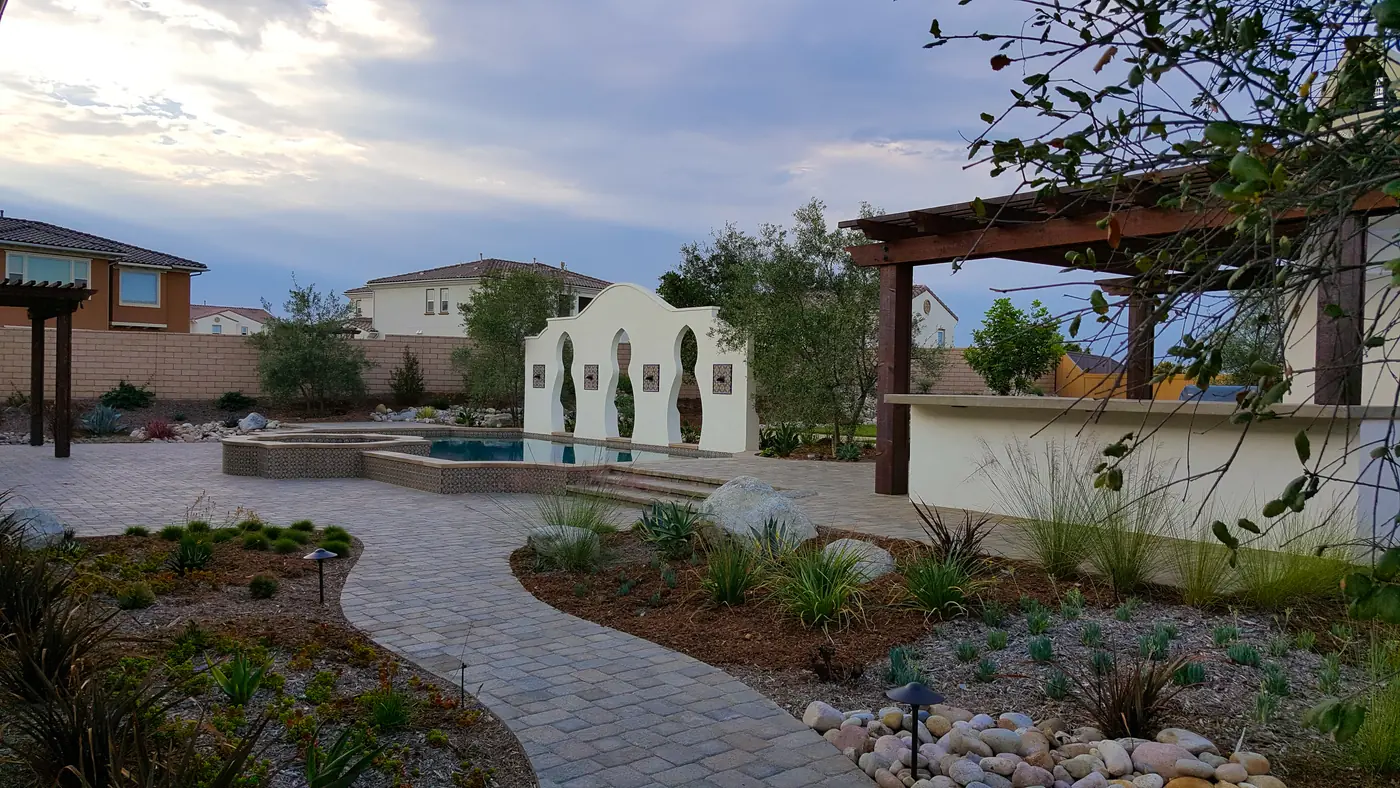
Tumbled concrete paver
The standard interlocking paver, tumbled in a drum so the edges and faces read as worn rather than moulded. The default surface on most San Diego backyards for a reason.
 Concrete pavers
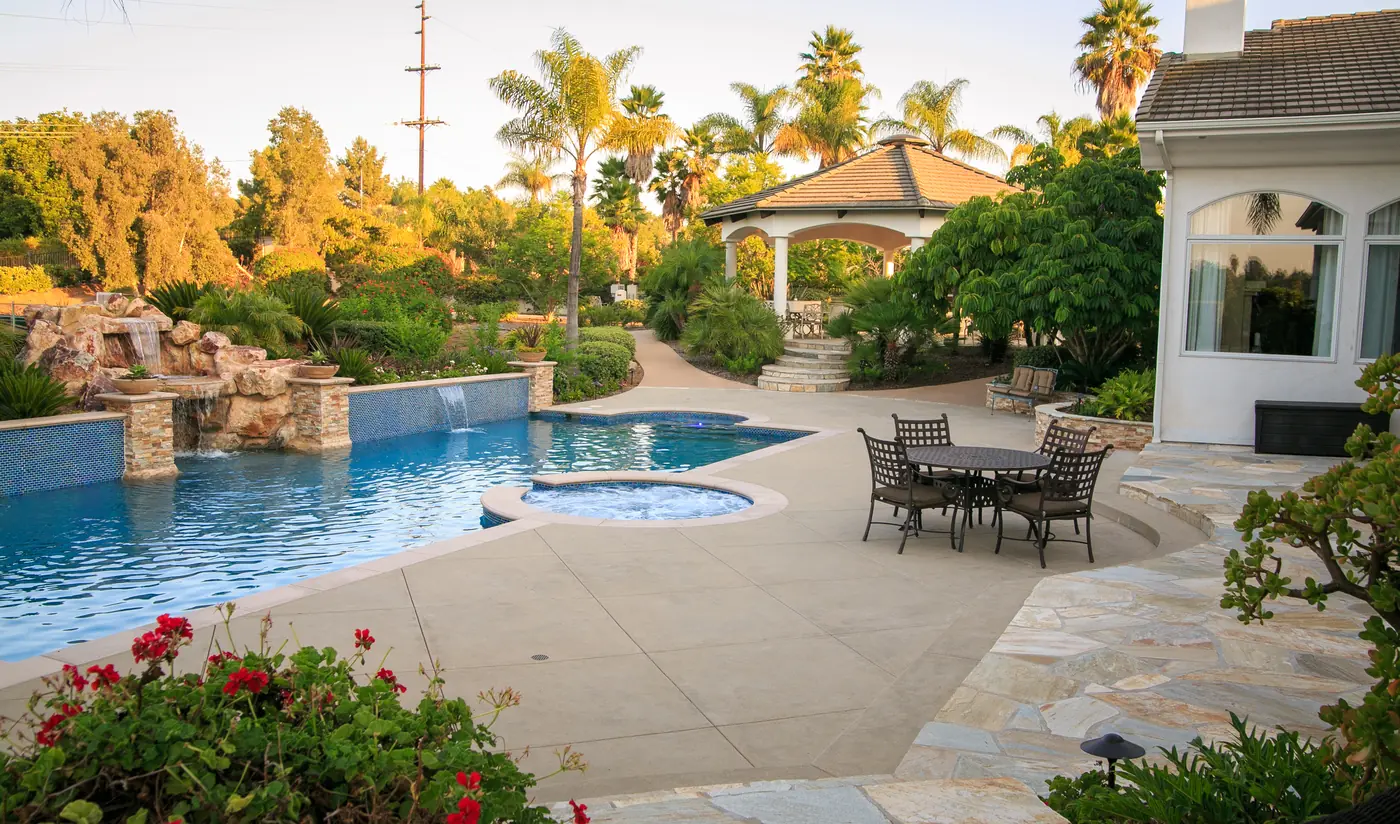
Large-format concrete slab
Fewer, bigger units with tight joints. Reads flat and modern, shows base settlement more honestly than small pavers do, and is heavy enough that handling is part of the labour cost.
 Natural stone
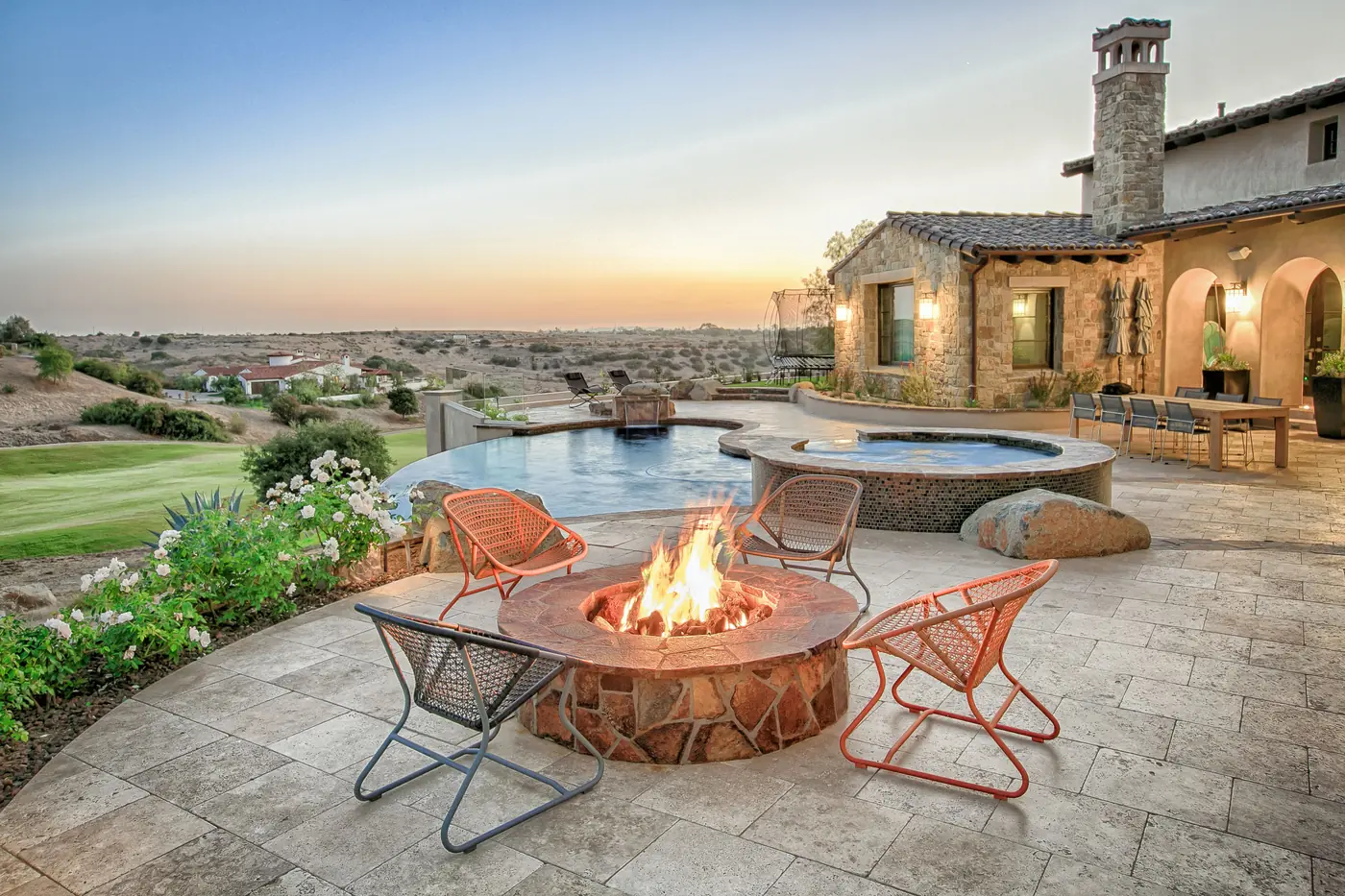
Travertine paver
Quarried limestone with an open, pitted surface. The reason it turns up on so many San Diego pool decks is temperature: it stays noticeably cooler underfoot than dark concrete in full sun.
 Natural stone
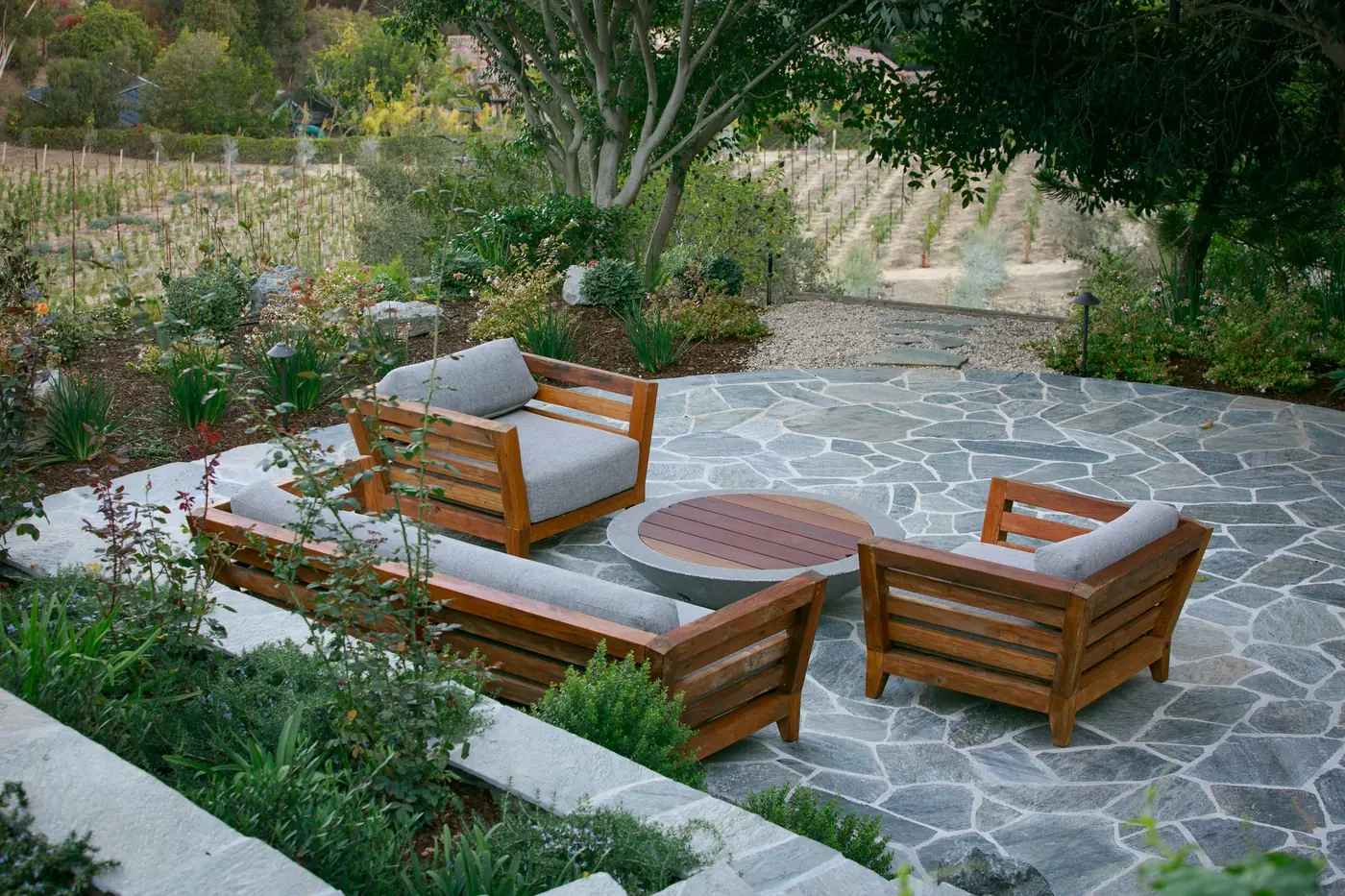
Flagstone
Irregular split stone, laid either dry with planted joints or wet-set on a slab. No two pieces match, which is either the whole appeal or the reason you rule it out.
 Porcelain
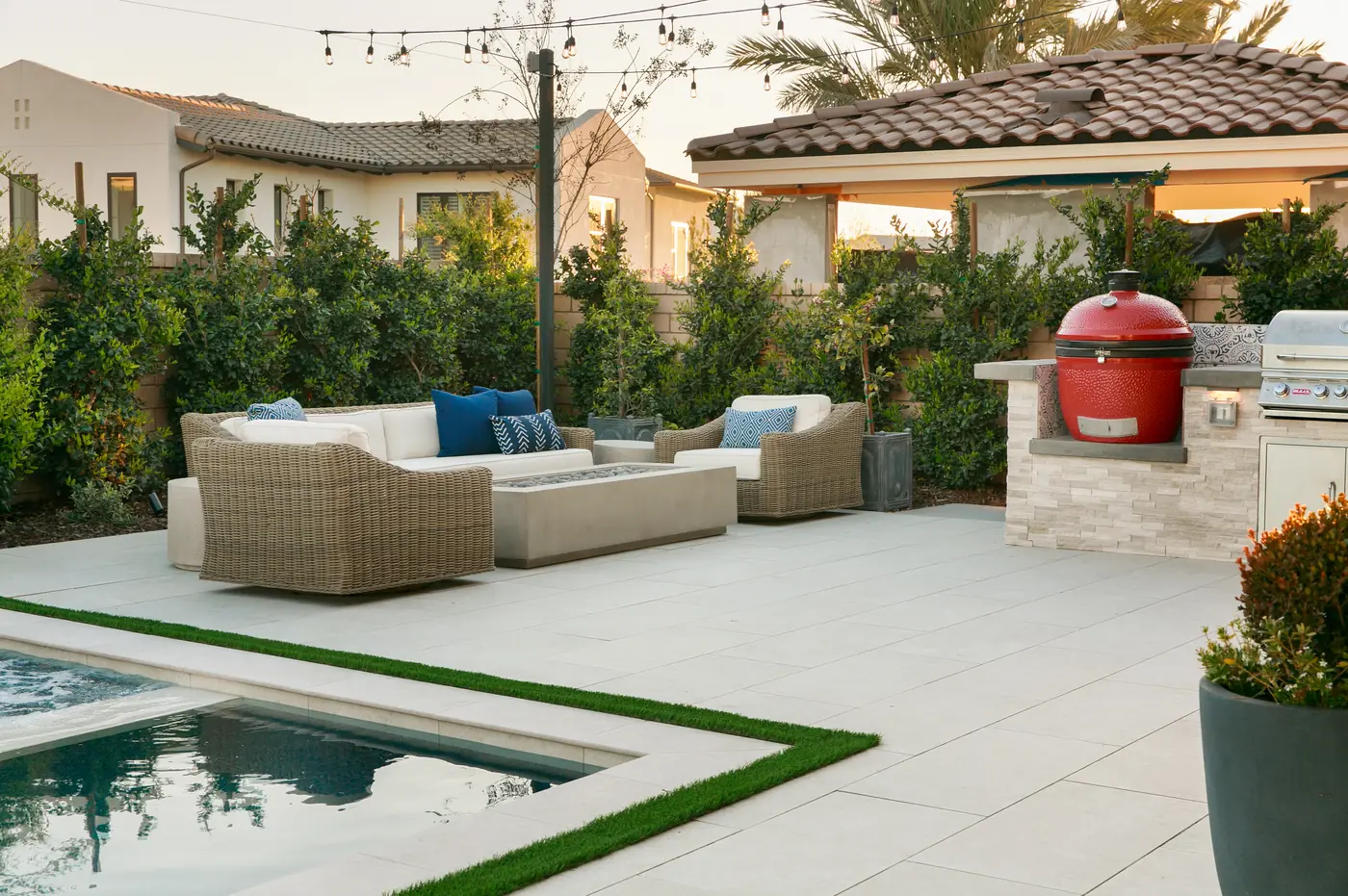
 paver
Thick outdoor-grade porcelain. Effectively non-porous, so it does not stain or need sealing, and it can carry a convincing stone or timber print. Hard, brittle, and unforgiving about base preparation.
 Permeable & planted joints
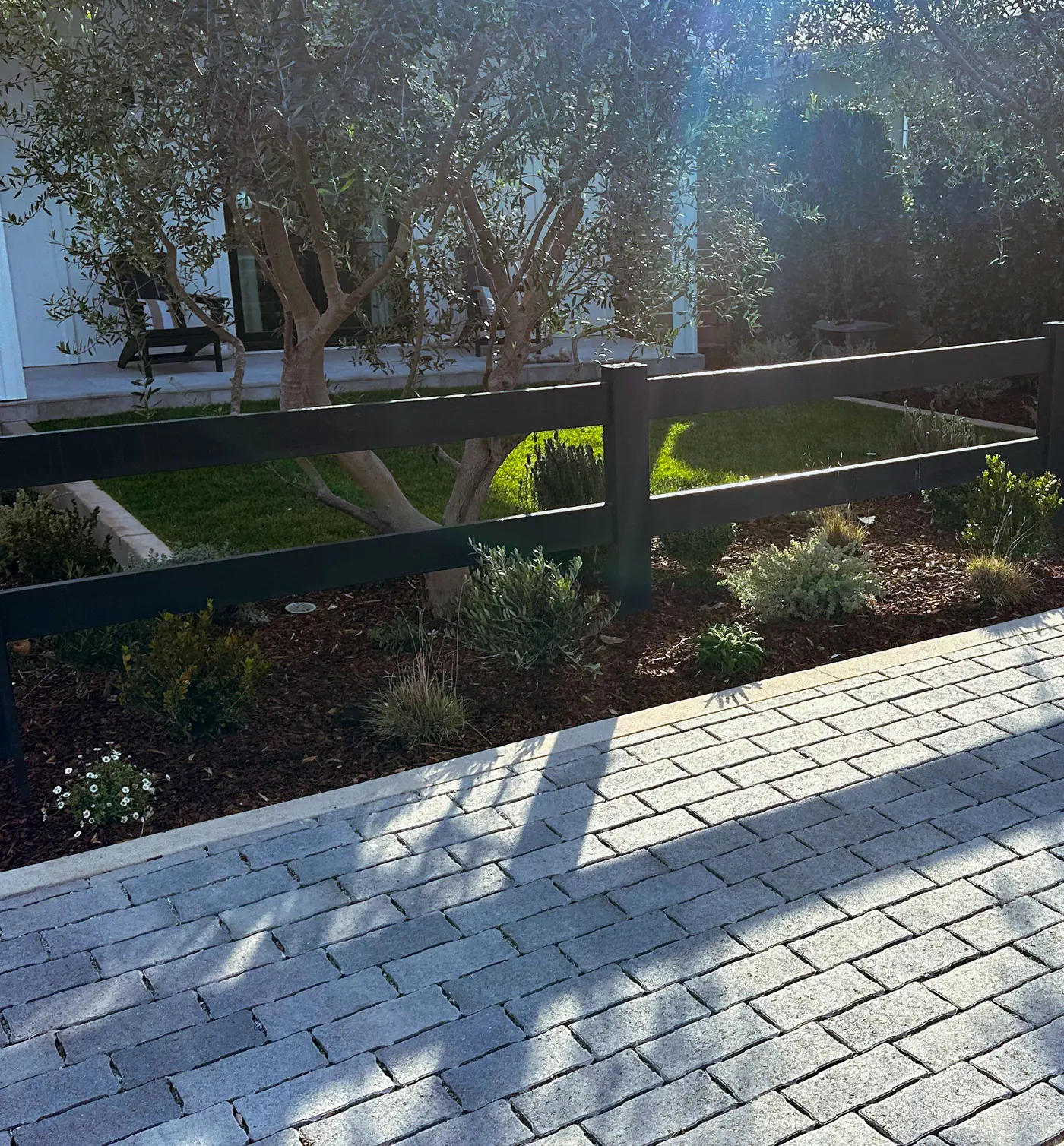
Permeable paver
Units set with deliberately open joints over an open-graded stone reservoir, so rain goes down instead of across. Sometimes a design choice, sometimes what the plan check asks for.
 Porcelain
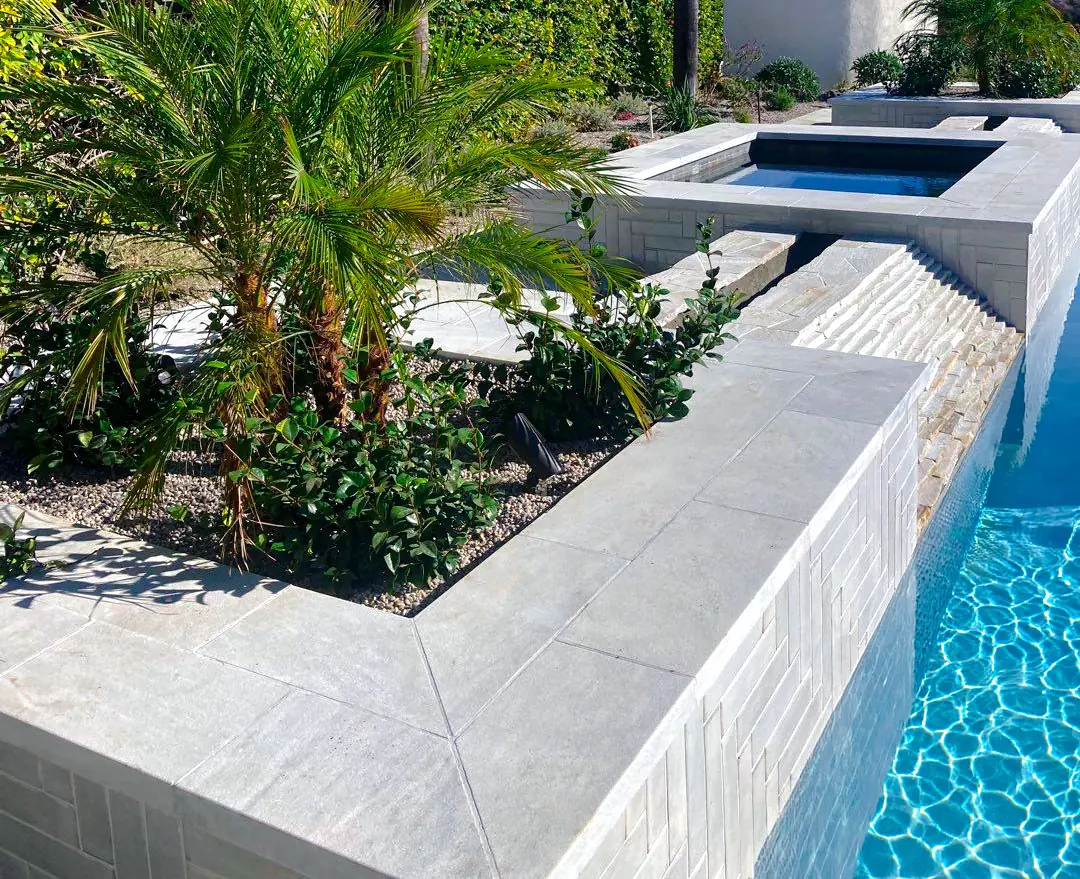
 coping with drip edge
Matching porcelain deck and edge, with a grooved underside so water breaks away instead of running back into the tile line. The non-porous option, if you never want to seal anything.
Nobody should pick pavers off a screen
Colour on a monitor is a guess, and a surface you will walk on barefoot for fifteen years is not a guess worth making. We put real samples in front of you at the design consultation, in daylight, next to each other — including the ones we would talk you out of.