

Coping
The edge of the pool — the one detail every guest touches.
Coping caps the pool shell, sheds water away from the beam, and is what a swimmer grabs. It is a small quantity of material and a disproportionate share of how the pool reads, which is why it is worth deciding on its own rather than defaulting to whatever matches the deck.
Filter
6 ways to narrow this down. Combine as many as you like — they stack.
7 of 7 coping in this category
- Poured in place
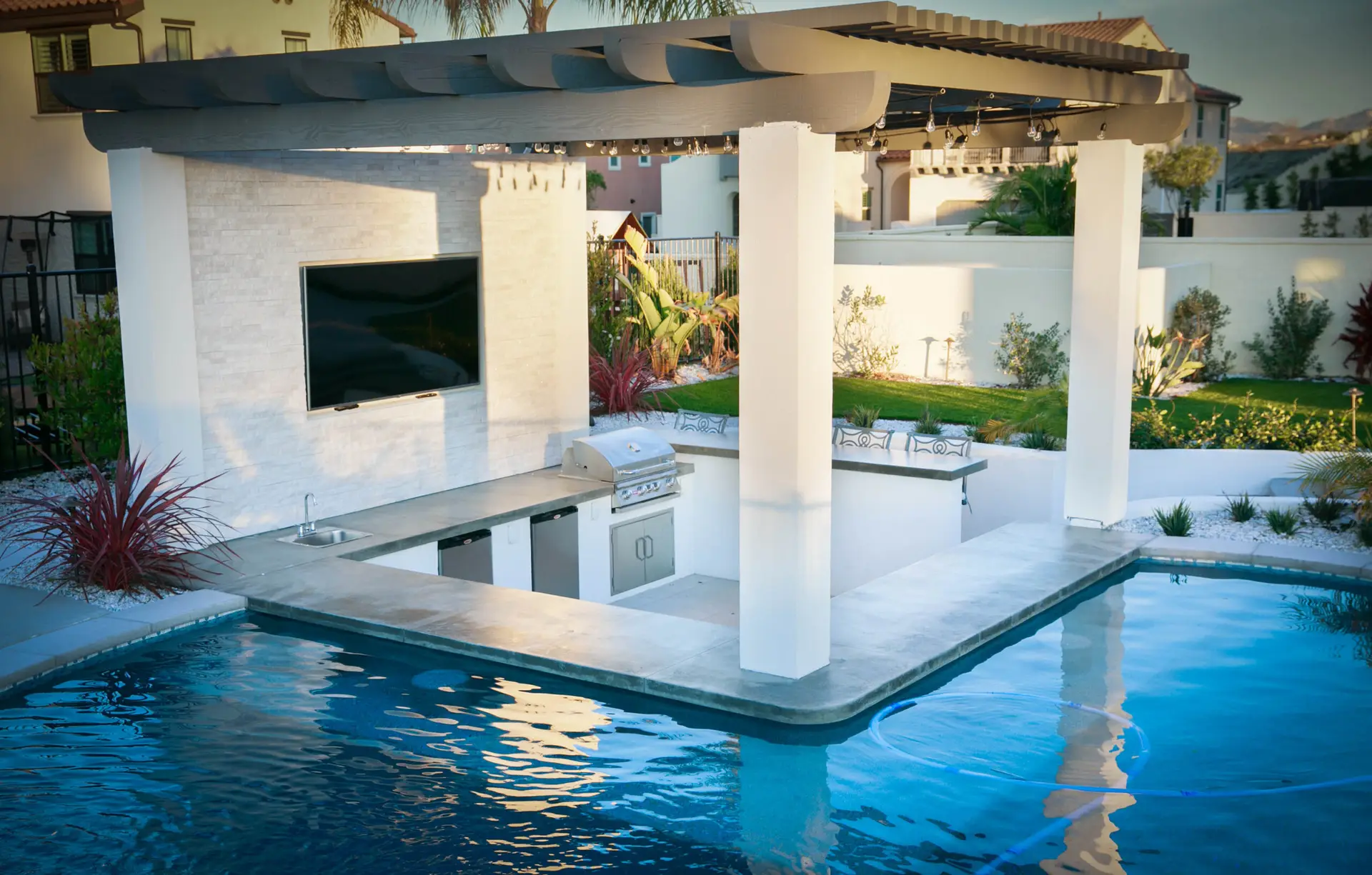
Cantilevered poured concrete
Concrete poured over a form so the deck itself turns down over the tile line. No joint between coping and deck, which is why it reads so clean — and why the deck and the edge have to be the same colour forever.
- Precast concreteColour families — we hold no photograph of this finish on one of our own projects
Precast concrete bullnose
Cast units with a rounded front edge, set individually on the bond beam. The workhorse — consistent, replaceable one unit at a time, and available in enough colours to sit under almost any deck.
- Natural stoneColour families — we hold no photograph of this finish on one of our own projects
Travertine bullnose coping
The stone version of the same profile. Cooler underfoot than concrete in direct sun, with the open pitting that makes travertine read as stone from two feet away.
- Natural stoneColour families — we hold no photograph of this finish on one of our own projects
Limestone square coping
A sawn square edge with a tight shadow line at the water. The detail that makes a rectangular pool look drafted. Least forgiving of a shell that is not dead straight.
- Natural stoneColour families — we hold no photograph of this finish on one of our own projects
Bluestone coping
Dense blue-grey sandstone, usually thermal-finished for grip. Holds an edge better than softer stone and reads cooler in colour, though a dark top absorbs more heat than a pale one.
- Unit & tileColour families — we hold no photograph of this finish on one of our own projects
Porcelain coping with drip edge
Matching porcelain deck and edge, with a grooved underside so water breaks away instead of running back into the tile line. The non-porous option, if you never want to seal anything.
- Unit & tileColour families — we hold no photograph of this finish on one of our own projects
Brick coping
Fired clay laid on the beam, generally with a rounded or bevelled front. Traditional, warm in colour, and the most likely of these to already match a house that is itself brick.
Nobody should pick coping off a screen
Colour on a monitor is a guess, and a surface you will walk on barefoot for fifteen years is not a guess worth making. We put real samples in front of you at the design consultation, in daylight, next to each other — including the ones we would talk you out of.