

Low-water front yard
Replacing lawn without the result looking like a gravel lot.
Taking the lawn out is the easy part. What stops a low-water yard reading as abandoned is structure — a few strong plant shapes, a surface you can walk on, and one thing that moves in the wind.
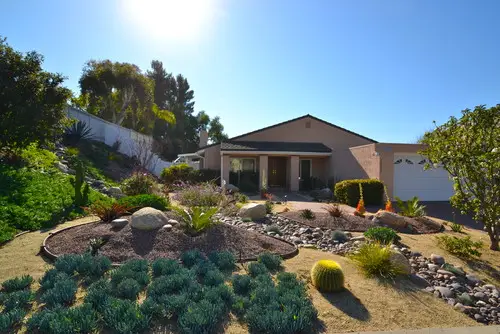
Agave
One strong shape does the work of a whole bed.
The strongest single shape available in a low-water palette. One well-placed agave does more compositional work than a bed of shrubs — which is also why the wrong one, three feet from a pool step, is a genuine hazard.
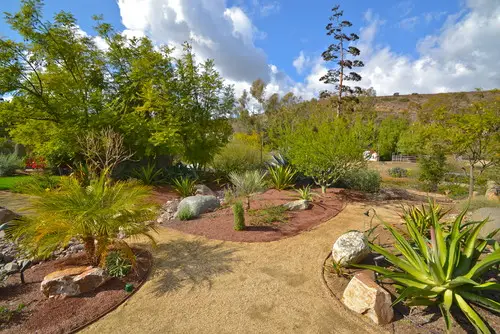
Ornamental grasses
Movement — the thing that stops it reading as static.
Soft mounds that move. Grasses are the counterweight to hardscape — they are the thing that stops a paved yard reading as a car park — and most of the California-appropriate ones want very little water.
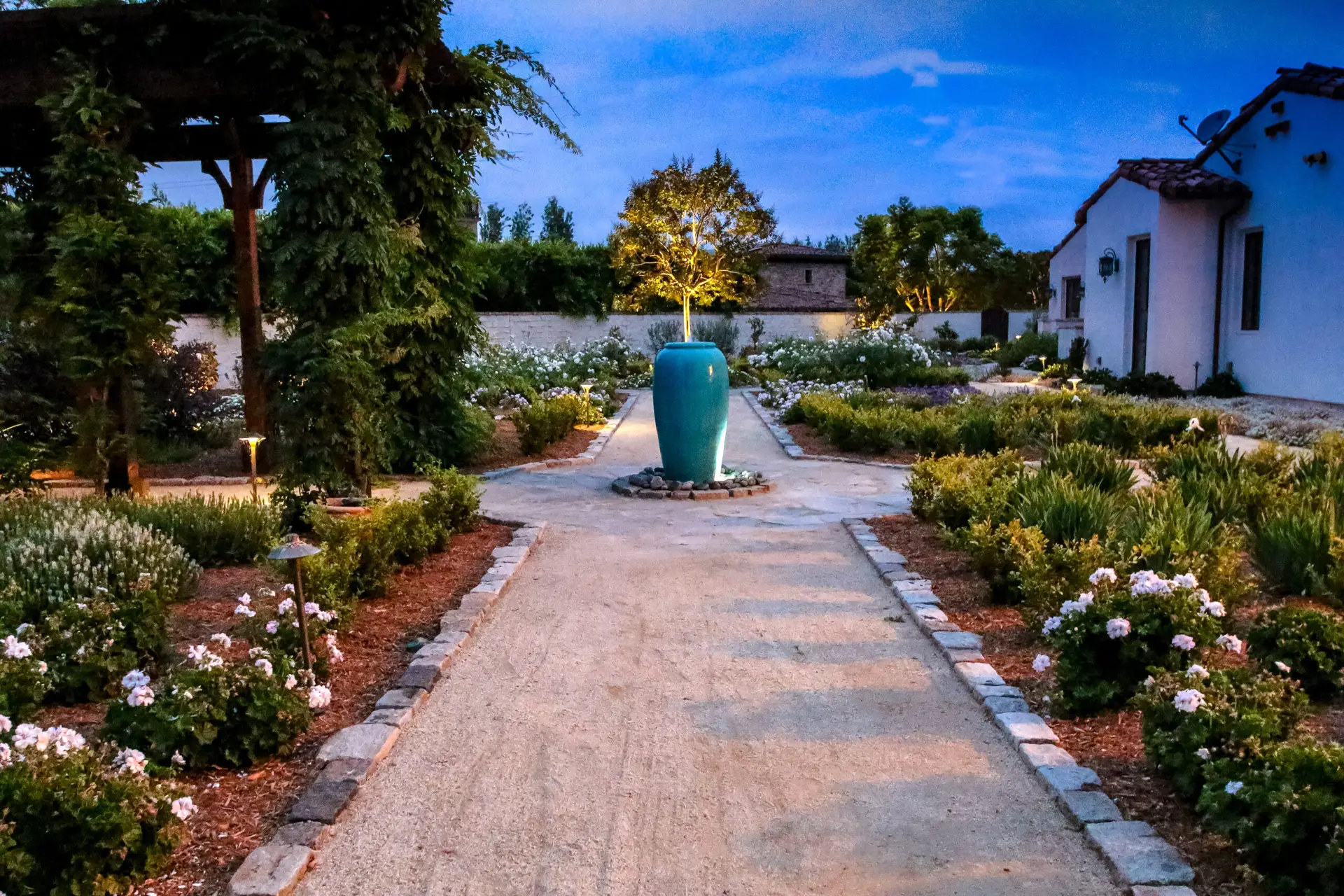
Westringia
The low hedge that used to be boxwood, on a fraction of the water.
Fine grey-green foliage that takes hard shearing, so it does the job people used to give boxwood on a fraction of the water. The default low hedge in a modern coastal palette.
Colour families — no photo heldFruitless olive
Canopy and shade without a fruit-stained driveway.
The Mediterranean workhorse: grey-green canopy, gnarled trunk, very low water once it is in. The fruitless forms exist specifically so you are not pressure-washing purple stains off a paver deck every autumn.
Colour families — no photo heldSlab with turf or gravel joints
A walkable surface that still drains and still reads green.
Large units floated in a field of turf, dymondia or chip. Breaks up a big paved area, drains, and is the detail that makes a modern deck look drawn rather than poured.
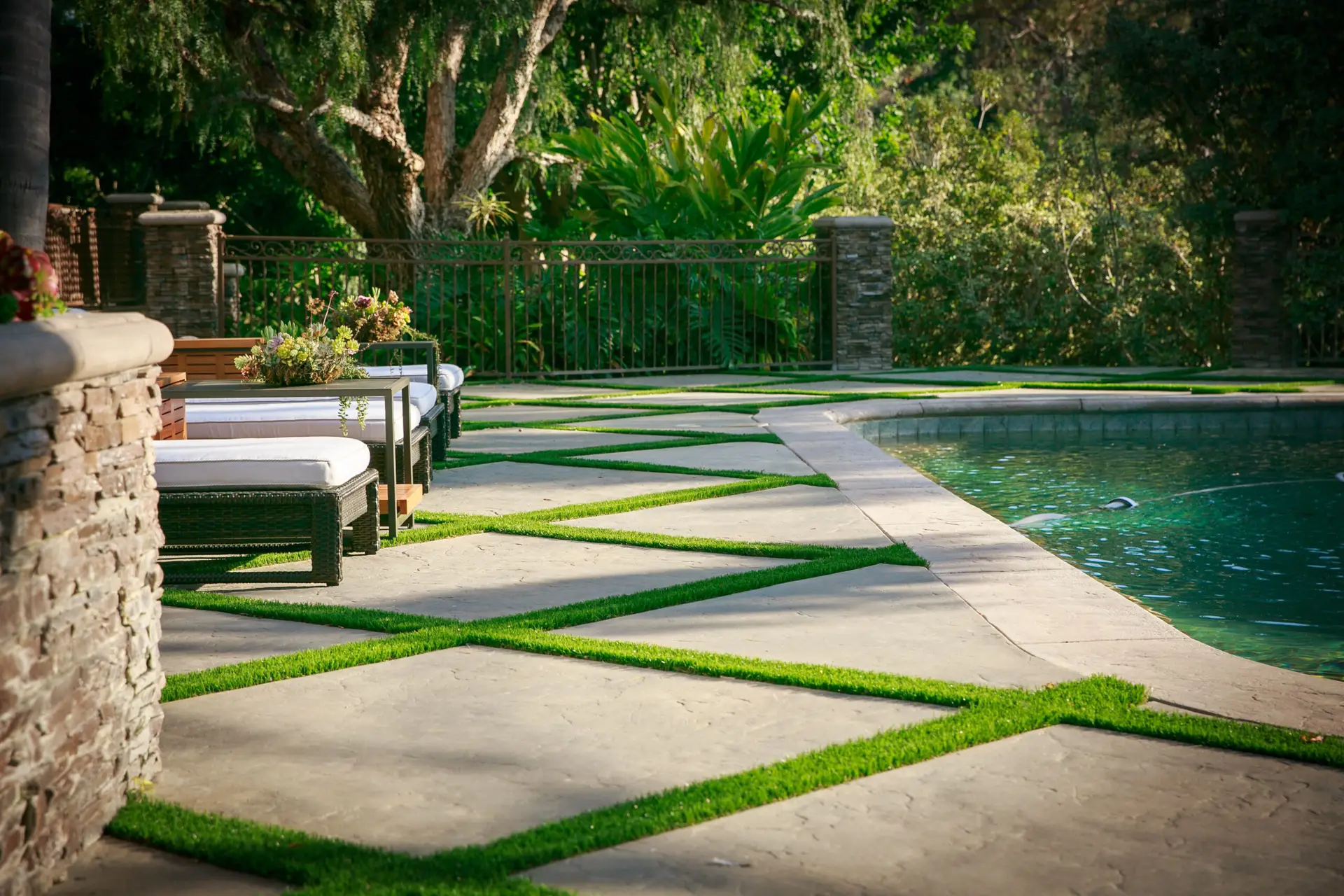
Artificial turf
The honest alternative when a lawn is genuinely wanted.
Not a plant, and it belongs on this page anyway, because it is the decision people actually make instead of a lawn. Zero water, zero mowing, a real up-front cost, and it gets hot in direct sun in a way grass does not.